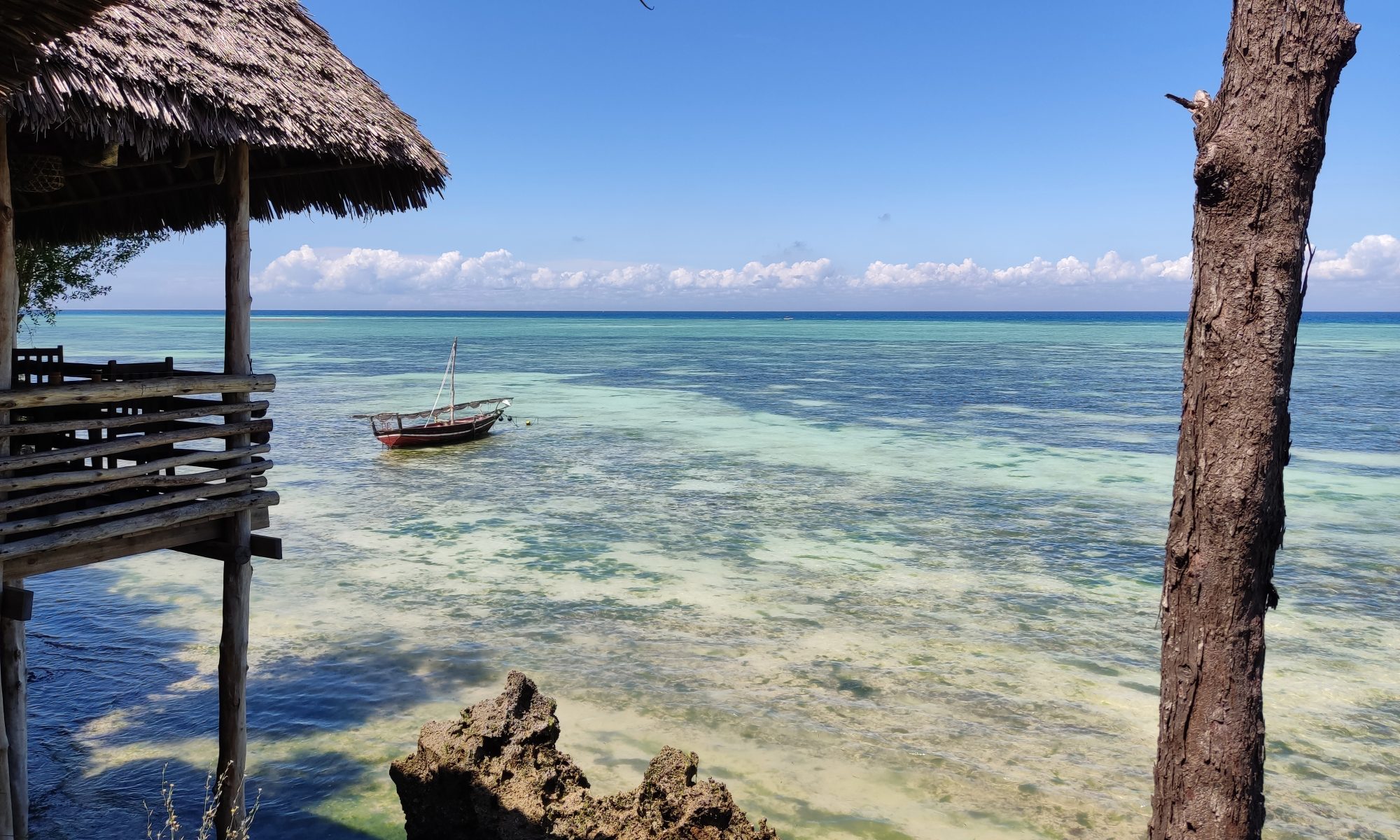
New study shows seasonal diversity and distribution of fish larvae in seagrass habitats of coastal East Africa

Here we investigated drivers of the seasonal fish larvae abundance and composition in seagrass habitats in coastal Kenya and Tanzania. We found a high diversity of fish larvae (54 families) inhabiting seagrass habitats that differed between sites and seasons. Overall, total larval abundances per site were low, likely related to the low productivity and strong hydrodynamic processes in this region. Our data suggests that most of the fish spawn year-round in these tropical waters as we did not find strong seasonal patterns. All sites had a high relative abundance of larvae from demersal spawning fishes, indicating that many fish species move to coastal sites for spawning. Primary productivity and dissolved oxygen, driven by hydrodynamics conditions are positively related to fish larvae productivity both in Kenya and Tanzania. These findings indicate that the occurrence of both resident and transient fish larvae in seagrass meadows is driven by strong hydrodynamic and tidal processes that transport fish larvae across adjacent habitats.

The full article is available here:

Ngisiange, N., Tarimo, B., Daudi, L. et al. Seasonal fish larvae abundance and composition in seagrass habitats of coastal East AfricaSci Rep 14, 11203 (2024). https://doi.org/10.1038/s41598-024-62012-3

Ocean acidification study shows high resilience of a coastal plankton community

Rossoll, D., Sommer, U. & Winder, M. Community interactions dampen acidification effects in a coastal plankton system. Mar Ecol Prog Ser 486, 37–46 (2013).

Changing seawater chemistry towards reduced pH as a result of increasing atmospheric carbon dioxide (CO2) is affecting oceanic organisms, particularly calcifying species. Responses of non-calcifying consumers are highly variable and mainly mediated through indirect ocean acidification (OA) effects induced by changing the biochemical content of their prey, as shown within single species and simple two-trophic interactions. However, it can be expected that indirect CO2 impacts observed at the single species level are compensated at the ecosystem level by species richness and complex trophic interactions. A dampening of CO2-effects can be further expected for coastal communities adapted to strong natural fluctuations in pCO2, typical for productive coastal habitats.

Here we show that a plankton community of the Kiel Fjord was tolerant to pCO2 levels projected by the end of this century (<1400 µatm), and only subtle differences were observed at extreme high values of 4000 µatm. We found similar phyto- and microzooplankton biomass and copepod abundance and egg production across all CO2 treatment levels. Stoichiometric phytoplankton food quality was minimal different at the highest pCO2 treatment, which was however far from being potentially limiting for copepods. These results contrast studies including single species that observed strong indirect CO2 effects for herbivores, suggesting limitations of biological responses at the organism to the community level. Although this coastal plankton community was highly tolerant to high fluctuations in pCO2, increase in hypoxia and CO2 uptake by the ocean can aggravate acidification and may lead to pH changes outside the experienced range for coastal organisms.