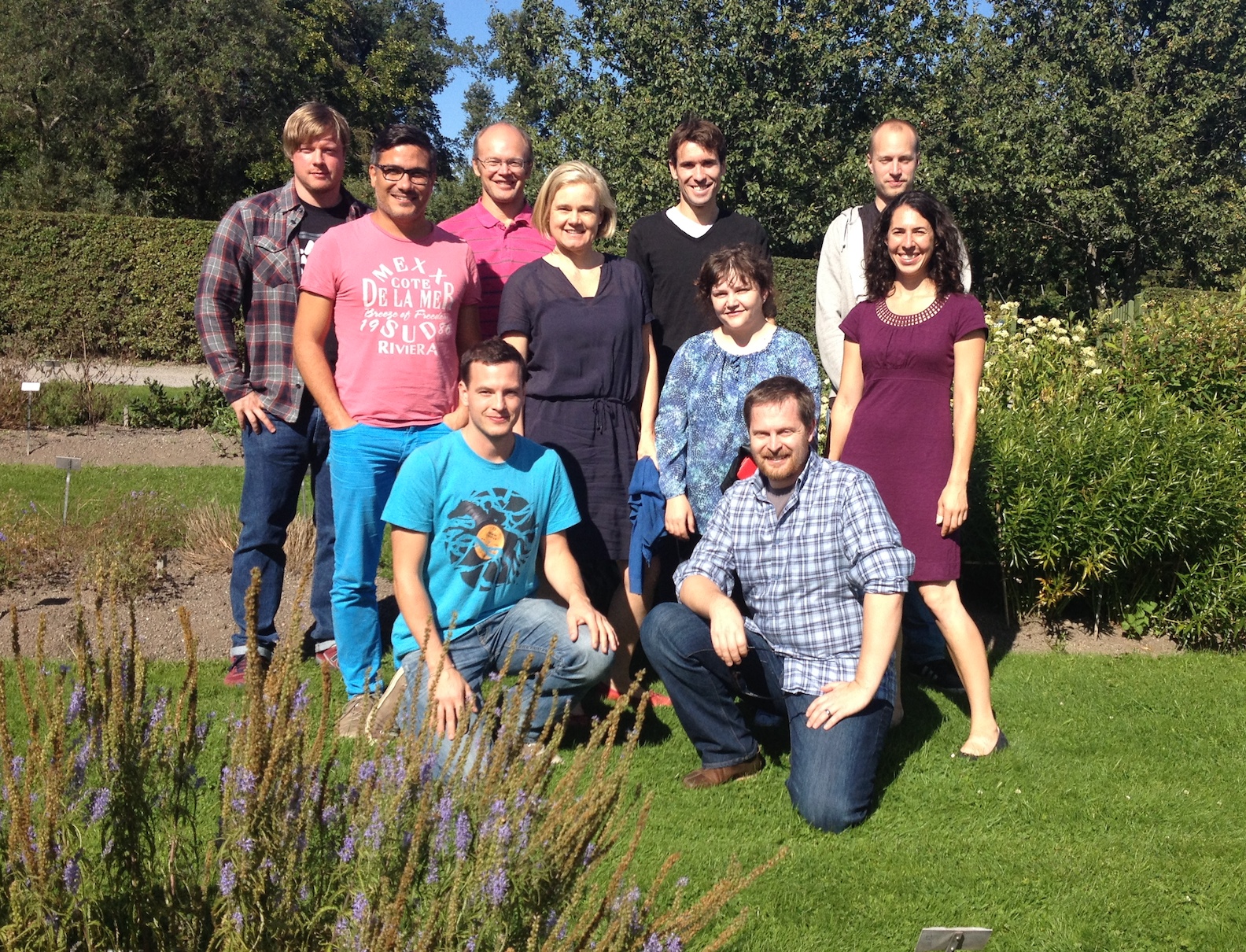
After our group lunch meeting in the Botanical Garden to wish Aaron good luck.
Author: monikawinder
Effects of climate change on food web interactions
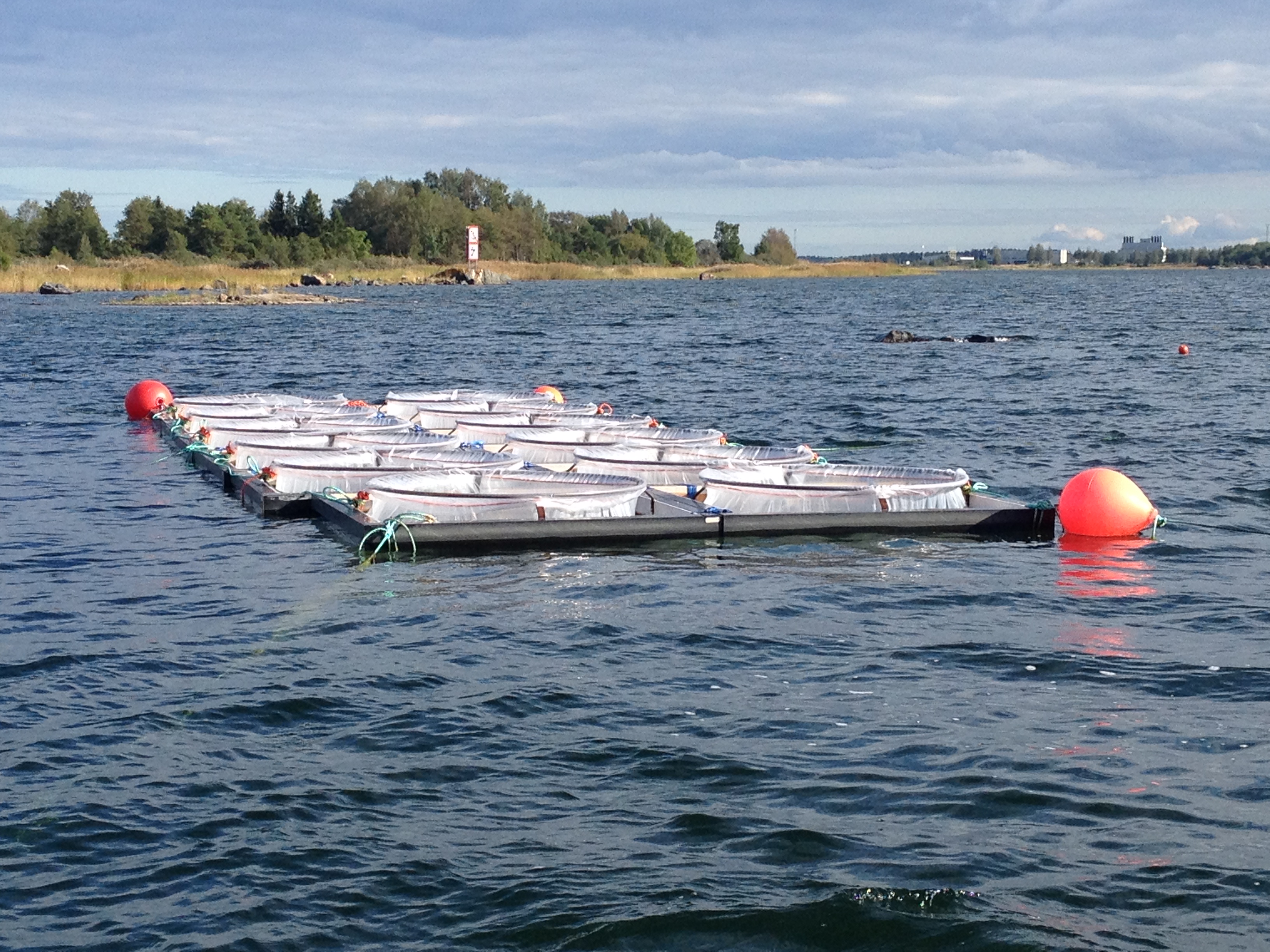
We are setting up a mescosm experiment in the Baltic Sea to study how climate change affects food web interactions and feedback loops:
New paper on the effect of species invasion on plankton interaction networks
Kratina, P., R. Mac Nally, W. J. Kimmerer, J. R. Thomson, and M. Winder. 2014. Human-induced biotic invasions and changes in plankton interaction networks. Journal of Applied Ecology. Doi: 10.1111/1365-2664.12266.
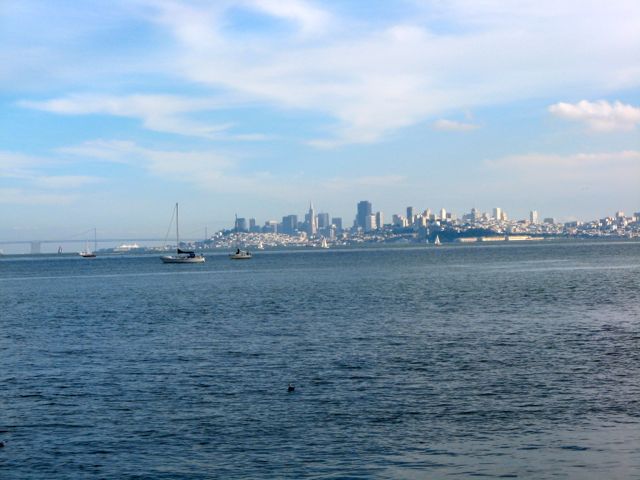
This study reports on how zooplankton species invasion affected multitrophic interaction network in the upper San Francisco Estuary over the last four decades.
We used multivariate autoregressive models with detailed time-series data from largely freshwater and brackish regions of the upper San Francisco Estuary to assess the topology, direction and strength of trophic interactions following major invasions and establishment of non-native zooplankton in the early 1990s. We found changes in the networks of biotic interactions in both regions after the major zooplankton invasions. Our results imply an increased pressure on native herbivores; intensi-fied negative interactions between herbivores and omnivores; and stronger bottom-up influence of juvenile copepods but weaker influence of phytoplankton as a resource for higher trophic levels following the invasions. We identified salinity intrusion as a primary pressure but showed relatively stronger importance of biotic interactions for understanding the dynamics of entire communities. Our findings highlight the dynamic nature of biotic interactions and provide evidence of how simultaneous invasions of exotic species may alter interaction networks in diverse natural ecosystems over large spatial and temporal scales.
Rafael successfully defended his PhD thesis – Congratulations!
May 15th 2014 Rafael defended his PhD thesis entitled: “Effect of environmental change on the biomolecular composition of phytoplankton and transference to higher trophic levels”. Well Done!

New PhD student: Konrad Karlsson
We have a new PhD student in our group – Konrad Karlsson. Welcome!

Konrad’s PhD project will focus on investigating the adaptive capacity of zooplankton to environmental change. His thesis is connected to the interdisciplinary BONUS project BIO-C3, which focuses on causes, consequences and management implications of biodiversity change in the Baltic Sea. Understanding the capacity for biological adaptation is critical to predict effects of climate change. Konrad’s thesis is expected to enhance the current knowledge on environmental tolerances and preferences of various Baltic Sea species.
New paper on the influence of sea urchin on benthic community composition with Aaron Galloway
Sea urchins are important ecosystem engineers in subtidal ecosystems worldwide, providing biogenic structure and altering nutrient dynamics through intensive grazing and drift algal capture. The current work evaluates red urchin (Strongylocentrotus franciscanus) density on fixed transects through time, individual displacement, and urchin-associated benthic community composition using a field-based approach at multiple depths (in and outside of the macroalgal zone) and replicated across sites in the San Juan Archipelago, Washington.
Lowe, A. T., Whippo, R., Galloway, A. W. E., Britton-Simmons, K. H. and Dethier, M. N. (2014), Sedentary urchins influence benthic community composition below the macroalgal zone. Marine Ecology. doi: 10.1111/maec.12124
BONUS Project BIO-C3 launched
Our new BONUS project BIO-C3 ‘Biodiversity changes – causes, consequences and management implications’, coordinated by Prof. Thorsten Reusch, GEOMAR, Kiel started. Within this project we aim to ask the overall question: How important is biodiversity for the functioning of the Baltic Sea?
Our group will focus on understanding how changes in species composition at the base and top of the food web affect ecosystem functions. We will also investigate the adaptive capacity of key zooplankton organisms to adapt to changing environmental conditions.
BIO-C3 includes a consortium of marine researchers from eight Baltic countries and a total of 13 participating institutes and universities.

ASLO OSM, Honolulu Feb 2014
We are representing our lab at the ASLO conference:
Andrea presenting phytoplankton size distribution patterns (see poster here)
Jens presenting plankton compound-specific 13C stable isotope in amino acids
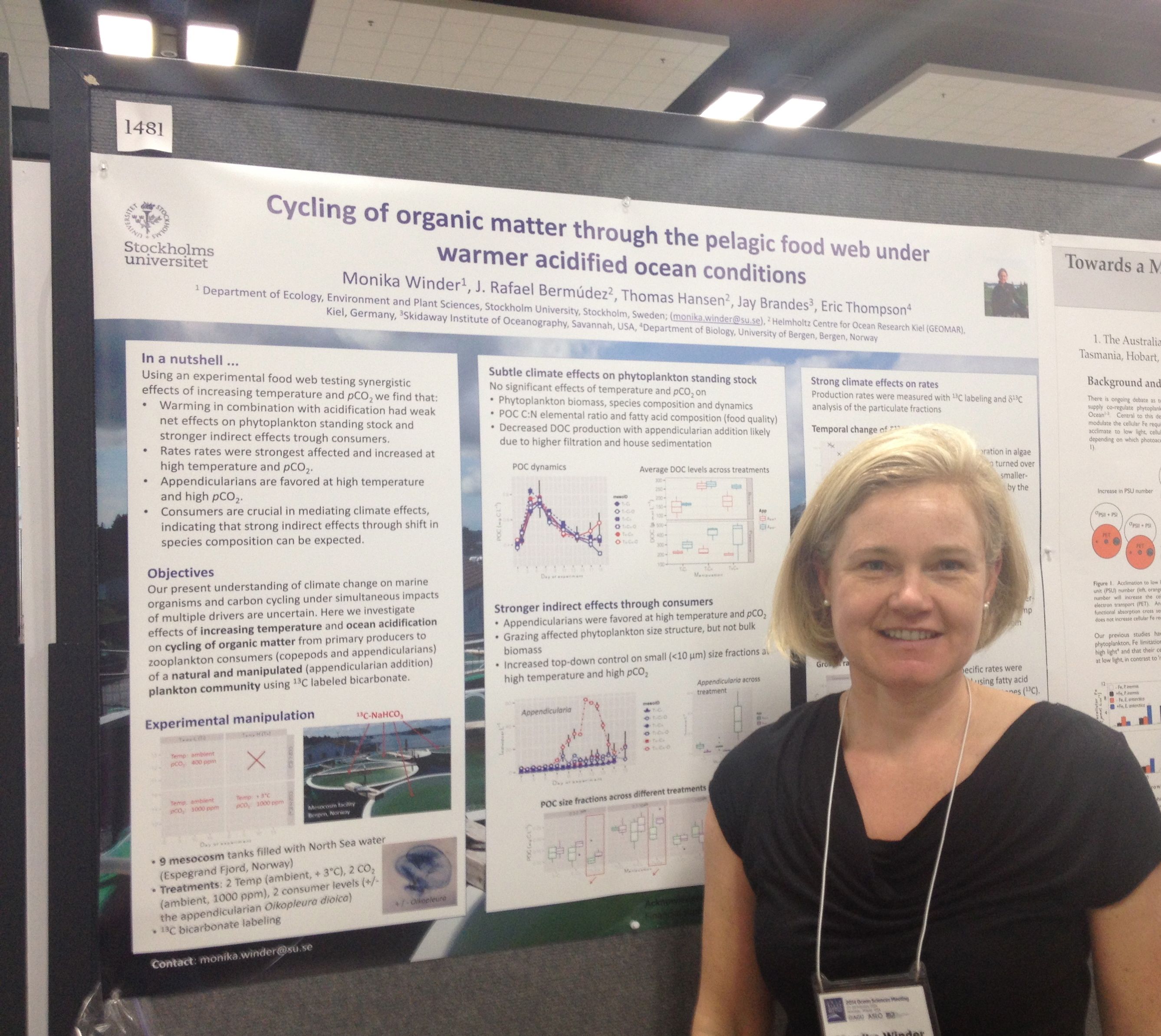
Monika presenting food web responses under warmer acidified ocean conditions (see poster here)
… and we are working hard at the OSM 5k Fun Run


PhD course in Times Series for Ecology
We are organizing a PhD course in Applied Times Series for Ecology at Stockholm University, Department of Ecology, Environment and Plant Sciences in March 2014.
This course provides an introduction to the analysis of ecological time series data. We will address questions such as: What are the trends in abundance and are they shared among species or populations? Which members of a community are strong (or weak) interactors? How stable is a particular community? How do effects of the environment on species change over time? And many more.
Course Instructors are Dr. Elizabeth (Eli) Holmes and Dr. Mark Scheuerell, U.S. National Marine Fisheries Service and the University of Washington, USA.
Please find more information at http://timeseriescourseemb.wordpress.com
Welcome Aaron!
Aaron Galloway joined our lab working on a project in the San Francisco Estuary.
 Winder Lab